When Healing Feels Like Betraying Your Family
A Faith-Based Perspective on Boundaries, Trauma, and the Guilt That Follows
There’s a very specific kind of tension that shows up in healing from childhood or relational trauma.
It doesn’t come when you first realize something in your past hurt you.
It doesn’t even come when you start learning about trauma or boundaries.
It comes later.

It comes when you begin to live differently. When your responses shift. When your tolerance changes. When your “yes” starts turning into, “I don’t think I can,” or “That doesn’t work for me anymore.”
Suddenly, instead of feeling proud of your growth, you feel heavy. Unsettled. Almost like you’ve done something wrong.
For many women, the thought isn’t just, “This is hard.” It’s, “This feels like I’m betraying my family.”
That feeling can show up in so many places—your relationship with your parents, your spouse, your adult children. You begin changing, and without warning, the role you’ve always played no longer fits the same way. The unspoken expectations shift. The patterns feel disrupted.
If the people around you don’t grow at the same pace—or don’t understand what’s changing—you can start to feel misunderstood. Blamed. Guilty. Even broken.
It can feel like your healing is creating distance instead of connection. Like choosing honesty over pretending has somehow made YOU the problem.
Yet this tension doesn’t mean you’re doing something wrong. It means something old is being challenged. Something unhealthy is losing its hold.
It doesn’t have to stay this way.
What Does Healing Look Like in Christian Counseling?
Healing rarely looks dramatic from the outside.

No one is clapping for you when you:
Don’t respond to your mom’s text right away
Stop over-explaining yourself to your husband
Choose not to engage in a circular argument with your adult child
No one sees the internal battle when you decide: “I’m not going to carry this conversation the same way I used to.”
Inside, something significant is happening.
You start noticing things you used to ignore.
The tension in your body when you glance down at your phone and see the name on the caller ID
How emotionally depleted you feel after certain conversations
How quickly you shift into putting out relational fires, smoothing things over that you didn’t initiate, or managing the fluctuations of others dysregulation
And then your behavior starts to shift—quietly at first.
You let a text sit instead of immediately responding out of obligation
You say, “I can’t make it,” without a long explanation
You stop trying to regulate your spouse’s emotions
You don’t jump in to rescue your adult child from the consequences of their actions
You leave conversations that feel disrespectful or manipulative
You pause to prayerfully consider before saying yes
You heal attachment wounds and respond with Biblical integrity
None of this is loud. None of it is dramatic.
But for you? It feels huge. It goes against everything you’ve trained yourself to do in your closest relationships.
The Guilt Isn’t Random—It’s Conditioned
The guilt that follows isn’t just emotional sensitivity. It too is learned.
If you were raised—or have lived for years—in environments where:
Keeping the peace mattered more than speaking honesty
Other people’s emotions became your responsibility to juggle and soothe
Saying no led to tension, withdrawal, or conflict where you were directly blamed
Love felt connected to compliance or availability
Your role was to hold everything together
Then of course this feels wrong.
This didn’t just shape how you relate to your parents.
It likely shaped:
How you show up in your marriage
How you respond to your children
How you handle conflict across your entire family system
Your system learned: “This is how we stay safe. This is how we stay connected.”
So when you start doing something different such as setting healthy boundaries and healing for good, your mind doesn’t say, “Hey-great job. This is healthy for you!”
It says:
“You’re being mean.”
“You’re going to hurt them.”
“This isn’t what a good wife/mom/daughter does.”
“What if this damages the relationship?”
Because those thoughts feel familiar they feel true.
Why Do I Feel So Guilty?
This is where it gets even heavier. Now it’s not just emotional—it’s spiritual.
You’re not just wondering if you’re being unkind. You’re wondering if you’re being un-Christlike.
Especially in marriage. Especially as a mother. Especially as a daughter.
In the roles that matter most to you—the ones you deeply want to honor God in—this tension can feel almost unbearable.
You’ve likely heard phrases such as:
“Submit”
“Serve”
“Put others before yourself”
“Honor your father and mother”
Each of those Bible-based concepts matter. They are meaningful. They carry weight, purpose, and responsibility. They reflect the heart of God when they are understood in the fullness of truth.
The problem is not Scripture. The problem is how this gets applied without wisdom, without context, and without mutual responsibility.
Somewhere along the way, it slowly turns into something else:
“Don’t have needs”
“Don’t speak up”
“Don’t disrupt the dynamic”
“Being self-sacrificing means being silent”
Maybe no one says those words outright, but it's implied. Reinforced over time. Modeled in subtle ways that teach you your role is to keep the peace at any cost.
So when you begin to grow—when you start noticing your limits, when you name what’s not healthy, when you choose honesty over quiet resentment—it doesn’t just feel uncomfortable. It feels wrong.
Now, choosing something healthier starts to feel like disobedience.
Like you’re stepping outside of what God asked of you.
Like honoring Him and honoring your own limits can’t exist in the same space.
That’s where the tension deepens.
When Being a “Good Christian Woman” Starts to Cost You
There’s something I see often in Christian spaces, especially for women.
The belief that being a “good Christian woman” means:
Being endlessly patient
Always accommodating
Avoiding conflict
Absorbing tension to keep the relationship intact
Especially in marriage. Especially in parenting adult children. Especially in family systems where you’ve always been “the steady one.”
I don’t agree with that because healthy, God-honoring relationships require:
Mutual respect
Honesty
Emotional safety
The ability to say, “This doesn’t feel okay,” without fear
A relationship where one person carries the emotional weight for everyone else is not Biblical harmony. It may look like peace on the outside. It may even be praised as patience, long-suffering, or strength.
As a Christian Counselor, I see the nervous system showing that underneath women are exhibiting enormous exhaustion, building resentment, and quiet disconnection.
God never designed relationships to function on the back of one person’s constant overextension. Biblical harmony includes mutual care, shared responsibility, and space for each person to be seen, supported, and accountable.
What looks like “keeping everything together” is often just an imbalance wearing a spiritual label.
Honoring Doesn’t Mean Staying Stuck
Many women genuinely believe they are honoring their parents, their spouse, or their Biblical role in submission. Their intentions are sincere. Their hearts are soft toward God. They want to do what is right.
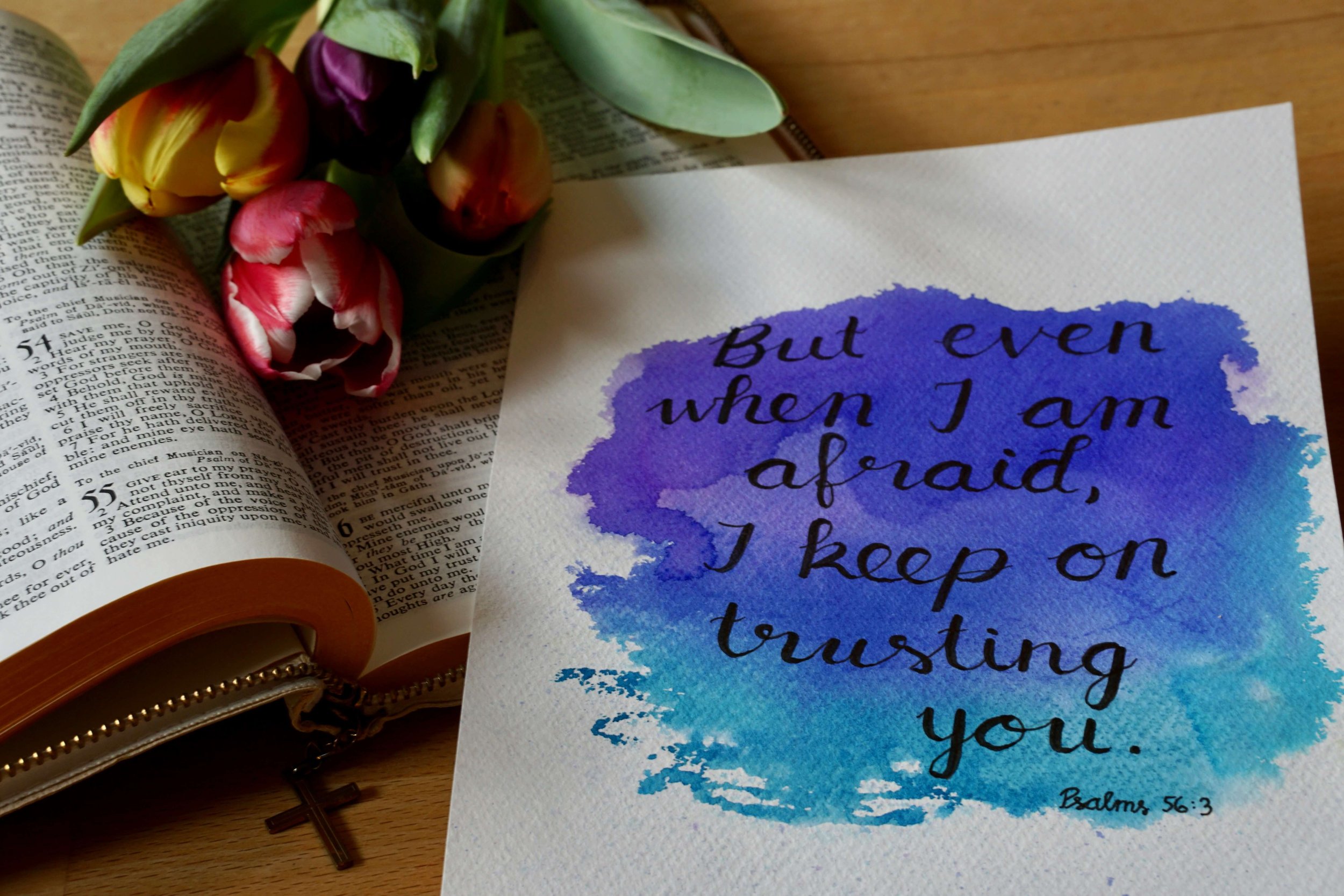
Somewhere along the way, honoring quietly becomes entangled with enduring things God never asked them to carry. It starts to look less like obedience and more like survival wrapped in spiritual language.
Honoring does not mean:
Staying in dysfunction
Silencing your voice
Tolerating ongoing disrespect
Honoring was never meant to erase you. It was never meant to require the loss of your voice, your safety, or your God-given ability to discern what is healthy.
In Marriage:
Love does not require emotional self-abandonment. It does not ask you to shrink, to walk on eggshells, or to carry the entire emotional weight of the relationship while calling it unity. Real love invites honesty. It creates room for repair. It does not punish you for having needs.
With Adult Children:
Care does not mean rescuing or over-functioning. It does not mean stepping in every time they struggle so that you can keep things from feeling uncomfortable. Loving them well sometimes means allowing them to face consequences, trusting that God is at work in places you cannot control.
In Extended Family:
Loyalty does not mean access without boundaries. It does not mean you are required to tolerate patterns that continue to wound you just to prove you are a “good” daughter, sister, or relative. Boundaries are clarity about what is healthy and what is not.
There comes a point where the patterns you learned no longer fit the person God is calling you to become; In counseling, you reach a point where staying the same starts to feel more like disobedience than growth.
Your life was never meant to stay shaped by fear, guilt, or old roles that kept you small.
It’s meant to be shaped by God—by His truth, His design for relationships, and His invitation into something healthier, freer, and more whole.
Are Boundaries Biblical?
Boundaries aren’t about pushing people away.
They’re about showing up honestly in your relationships without abandoning yourself in the process.
They might sound like:
“I’m not able to have this conversation right now.”
“I’m going to step away.”
“That doesn’t feel okay for me.”
“I trust you to handle that.”
“I’m not going to take that on.”
In marriage, they protect mutual respect. With adult children, they allow growth. With parents, they create appropriate separation.
Over time, boundaries allow relationships to either become healthier or reveal what was never healthy to begin with.
How Do I Get Started with Online Christian Counseling?
If any part of this article resonated with you — if you recognized your own story in these words, or if you’ve been quietly wondering whether therapy might finally be the right time — I would love to connect with you.
I offer a free 20-minute consultation for new clients. This is a no-pressure conversation where we can talk about what you’re walking through, what kind of support might be most helpful, and whether working together feels like a good fit. There’s no obligation, and it costs you nothing but a little bit of time.
You can reach out to schedule your free consultation by clicking here. I work specifically with women — including women in ministry — navigating trauma, anxiety, relational wounds, and the complicated intersection of faith and mental health. You don’t have to have everything figured out before you reach out. You just have to take one step.
And if you’re not quite there yet, that’s okay too. You’re welcome to keep reading more blog post here. I write regularly on topics like boundaries, EMDR, anxiety, and faith-based healing — and there is always something here for wherever you are in your journey.
Additional Online Counseling Supports
If you’ve read this and something in you is stirring—if you’re starting to recognize patterns, feel the weight of what you’ve been carrying, or realize how much your past is still shaping your present—you may be looking for support.
Some women come here specifically searching for trauma therapy. And that may absolutely be part of your next step.
Yet sometimes, what you’re needing feels bigger than just one category. It’s not only about trauma—it’s about how it’s showing up in your anxiety, your relationships, your faith, and the roles you’re trying so hard to hold together.
If that’s you, here’s a fuller picture of how I support the women I work with:
Trauma Therapy— For women who are carrying the weight of past experiences that are still shaping how they show up today. This can look like childhood relational wounds, growing up in unstable or emotionally unsafe environments, ministry burnout, religious harm, or unresolved grief. Trauma doesn’t always announce itself loudly. Sometimes it shows up in your reactions, your relationships, your ability to feel safe, or your struggle to trust your own voice. In our work together, we gently begin to untangle what you’ve been carrying—without rushing, without minimizing, and without expecting you to simply “move on.”
EMDR Intensives & Therapy — EMDR (Eye Movement Desensitization and Reprocessing) offers a deeper, more targeted approach to healing the memories and experiences that feel stuck. Instead of just talking about what happened, EMDR helps your brain actually process it in a way that reduces the emotional charge and shifts the beliefs attached to it. For many women, this is where real movement begins—where triggers lessen, where the past stops feeling so present, and where healing becomes something you can actually feel, not just understand intellectually.
Anxiety Treatment — For women who feel chronically overwhelmed, who carry a constant undercurrent of worry, or who lie awake at night unable to quiet their minds. Anxiety is often more than just stress—it’s connected to deeper patterns, past experiences, and the pressure you’ve been carrying for far too long. We work together to understand what’s driving it and to create real, sustainable relief that doesn’t rely on just pushing through.
Support for Women in Ministry — Whether you’re a pastor’s wife, a worship leader, a ministry director, or a woman who simply gives a great deal of herself to her faith community, I understand the unique pressures you carry. The expectations, the visibility, the constant outpouring—it can leave very little space for you to be human. This is a place where you don’t have to hold it all together. You’re not the one pouring out here—you’re the one being cared for.
Faith-Integrated Therapy — For women who want their relationship with God to be part of the healing process, not separated from it. I approach therapy with a deep respect for your faith, integrating biblical truth with emotional and psychological insight. This is not about using Scripture to dismiss pain—it’s about allowing God to meet you in it, bringing clarity, comfort, and transformation in a way that honors both your heart and your beliefs.
Healing often begins with awareness, yet it deepens when you start to live differently—when boundaries shift, when roles change, and when the weight you’ve been carrying is finally named for what it is. That tension you feel, the guilt, the questioning, even the fear of “getting it wrong,” doesn’t mean you’re failing. It means something old is being challenged. As you continue this process, you’re not betraying your family, your faith, or your role—you’re allowing God to reshape what was never meant to stay the same, leading you into relationships marked not by imbalance or silence, but by truth, health, and genuine connection.